
Landing Page vs Home Page: What’s the Difference and Why It Matters
Posted On: April 9, 2026
Reading Time: 4 min read
Share:


Keep Up with Marketing Trends
Get the weekly newsletter
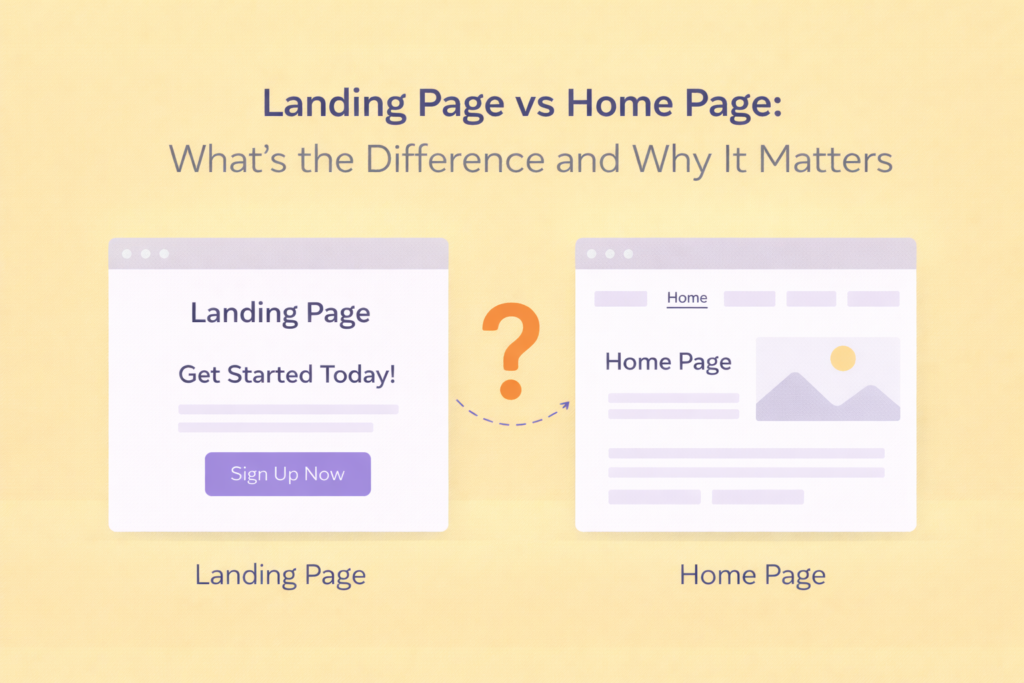
Table of Contents
When businesses decide to build a website, one common confusion we often see is this:
“Do we need a Home Page or a Landing Page?”
They may sound similar, but they serve very different purposes. Choosing the wrong one can directly affect enquiries, leads, and conversions. This blog explains the difference in a simple way, so you can clearly understand what your business actually needs.
What is a Home Page?
A Home Page is the main introduction page of a website.
Its purpose is to:
- Introduce the brand
- Give an overview of what the business does
- Help users explore different sections of the website
A Home Page usually contains:
- About the business
- Services or products overview
- Testimonials or trust elements
- Navigation links to other pages
In short:
A Home Page helps users understand your business.
You can think of it like a company introduction or reception area where visitors get a complete picture before deciding where to go next.
What is a Landing Page?
A Landing Page is designed with one clear goal.
Its purpose is to:
- Get users to take a specific action
That action could be:
- Enquiring about a service
- Signing up for something
- Booking a call
- Purchasing a product
A Landing Page usually:
- Focuses on only one service or offer
- Has minimal content and links
- Removes distractions
- Has one strong Call to Action (CTA)
In short:
A Landing Page helps users take action.
You can think of it like a focused sales page built to convert visitors into leads or customers.
The Key Difference Between a Home Page and a Landing Page
The main difference lies in their goal.
Home Page
- Has multiple goals
- Encourages exploration
- Contains many links and sections
- Focuses on awareness and trust
Landing Page
- Has one clear goal
- Encourages immediate action
- Contains minimal links
- Focuses on conversions
Both are important, but they are not interchangeable.
When Should You Use a Home Page?
A Home Page is best when:
- Your business offers multiple services
- You want to build brand credibility
- Users need an overall understanding of your business
- You are creating a complete website
When Should You Use a Landing Page?
A Landing Page is best when:
- You are running ads or campaigns
- You are promoting a single service or offer
- You want more enquiries or sign-ups
- You want users to take one specific action
A Common Mistake Businesses Make
Many businesses send paid traffic or potential clients to their Home Page when they actually need a Landing Page.
The result?
- Visitors come to the website
- They feel confused or distracted
- They leave without taking action
This is one of the most common reasons businesses say:
“We are getting traffic, but no enquiries.”
How We Help
A successful website is not just about design – it’s about purpose.
Before designing anything, we help you:
- Understand your business goal
- Decide whether you need a Home Page, a Landing Page, or both
- Structure the page to guide users clearly
- Design with conversion in mind, not just visuals
The right page, designed for the right goal, can make a big difference in results.
Explore our UX/UI Services https://hapxdigital.com/services/ux-ui-design-management/
Final Thought
If you are unsure whether your business needs a Home Page or a Landing Page, the answer is not one-size-fits-all.
It depends on:
- Your business goal
- Your audience
- What action you want users to take
Choosing correctly is the first step toward a website that actually works for your business.
Need help deciding what your business needs?
Let’s work together to create a strategy that drives real results.
Frequently
Asked Questions!
What is the difference between a landing page and a home page?
A home page introduces your entire business and helps visitors explore different sections of your website. A landing page is built for one specific goal — such as getting an enquiry, sign-up, or purchase. The key difference is purpose: a home page builds awareness, while a landing page drives action.
Can a website have both a home page and landing pages?
Yes. Most successful business websites have both. The home page serves as the main entry point for visitors who want to learn about the business. Landing pages are created separately for specific campaigns, services, or offers — especially when running paid ads or promotions.
Why should I not send paid ad traffic to my home page?
A home page has multiple links, sections, and goals, which can distract visitors. When someone clicks on an ad, they expect to land on a page that directly matches what was promised. Sending them to a home page increases confusion and reduces the chances of them taking action. A dedicated landing page keeps them focused and improves conversions.
How do you customize strategies for different businesses?
Every business is unique, so we start by learning your goals, audience, and challenges. From there, we craft strategies tailored to what will work best for your brand and market.
What should a landing page include?
A good landing page should include a clear headline, a brief description of the offer or service, key benefits, trust elements such as testimonials or credentials, and one strong Call to Action (CTA). It should have minimal navigation links to avoid distractions and keep the visitor focused on a single action.
When should a business use a landing page instead of a home page?
A business should use a landing page when running paid ads or campaigns, promoting a specific service or offer, or when the goal is to collect leads, enquiries, or sign-ups. If you want visitors to take one clear action rather than explore your website, a landing page is the right choice.