Why Your Website Gets Traffic but No Leads
Posted On: July 14, 2026
Reading Time: 6 min read
Share:


Keep Up with Marketing Trends
Get the weekly newsletter
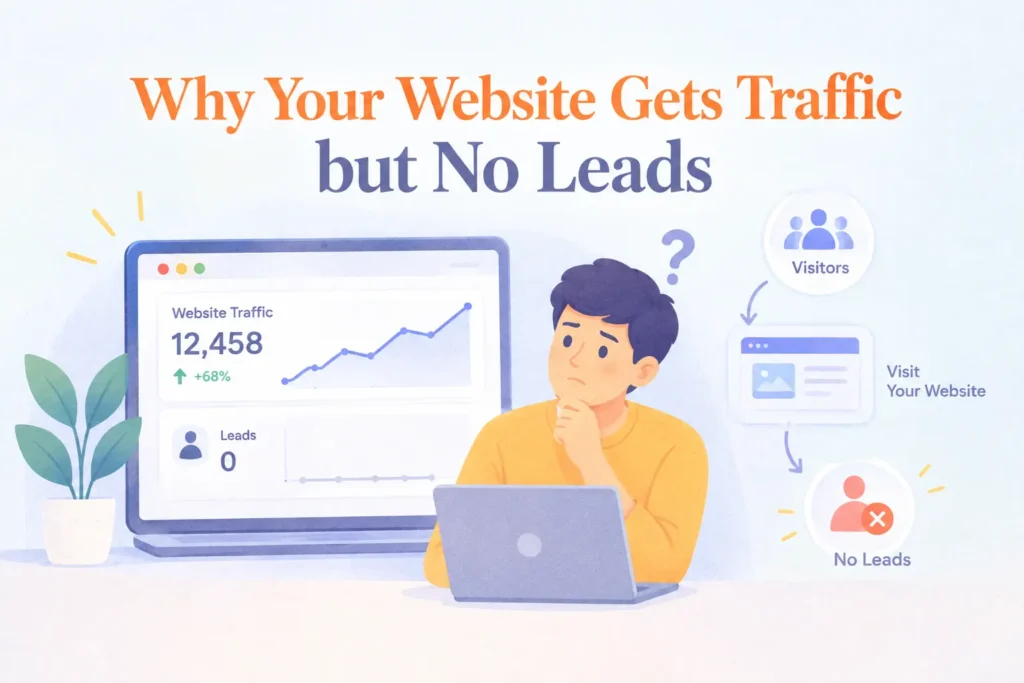
Table of Contents
- You’re Bringing the Wrong People to Your Website
- Your Message Isn’t Clear Enough
- Your Website Is Too Slow
- You’re Not Telling Visitors What to Do Next
- Your Website Doesn’t Build Trust
- Your Contact Form Feels Like a Job Application
- Your Content Answers Questions but Doesn’t Sell Solutions
- You’re Looking at Traffic Instead of Conversions
- Small Improvements Can Deliver Big Results
- Conclusion
- Frequently Asked Questions
Getting people to visit your website is exciting. Whether your traffic comes from Google, social media, or paid ads, seeing those numbers grow feels like you’re doing something right.
But here’s the catch.
Traffic doesn’t always mean business.
If hundreds of people are visiting your website every month but hardly anyone is filling out your contact form, booking a consultation, or making a purchase, something isn’t working. The good news is that it usually isn’t because your business isn’t good enough. More often than not, it’s because your website isn’t giving visitors a reason to take the next step.
Let’s look at some of the most common reasons why this happens.
Not every visitor is a potential customer.
You’re Bringing the Wrong People to Your Website
Sometimes a website ranks for keywords that bring in people who are simply looking for information rather than someone ready to buy. They might read your blog, learn something useful, and leave.
Instead of focusing only on increasing traffic, focus on attracting the right audience by following SEO best practices and creating content that matches what your ideal customers are searching for. . The visitors who are already looking for your products or services are much more likely to become leads.
Pro Tip: Use Google Search Console to check which queries are actually driving clicks if they’re informational (“what is…” “how to…”) rather than transactional, that’s your signal to adjust targeting.
Your Message Isn’t Clear Enough
Imagine walking into a shop where you have no idea what’s being sold.
That’s exactly how visitors feel when they land on a website with confusing headlines or unclear messaging.
Within the first few seconds, people should understand:
- What your business does
- Who your services are for
- How you can help solve their problem
If visitors have to figure everything out themselves, they’ll probably leave and visit another website.
Your Website Is Too Slow
We’ve all done it.
You click on a website, wait a few seconds, and then close the tab because it’s taking too long to load.
Your visitors are no different.
A slow website creates frustration before someone even starts reading your content. It also affects your search visibility, making it harder for potential customers to find you in the first place.
Simple improvements like compressing images, reducing unnecessary scripts, and choosing reliable hosting can make a noticeable difference.
You’re Not Telling Visitors What to Do Next
One of the biggest mistakes businesses make is assuming visitors will automatically know what to do.
They won’t.
Every important page should guide users toward a clear next step.
Whether that’s requesting a quote, booking a consultation, downloading a guide, or contacting your team, make it obvious.
A simple and visible call to action can make a huge difference to your conversion rate.
Your Website Doesn’t Build Trust
Think about your own buying habits.
Would you contact a business that has no reviews, no client testimonials, no portfolio, and no information about who they are?
Probably not.
People want reassurance before they make a decision.
Adding customer testimonials, project case studies, certifications, awards, and real examples of your work helps visitors feel confident that they’re making the right choice.
Trust is often the difference between someone leaving your website and someone becoming a customer.
Your Contact Form Feels Like a Job Application
Nobody enjoys filling out long forms.
If you’re asking for too much information before someone can even send an enquiry, you’re creating unnecessary friction.
Keep things simple.
Ask only for the details you genuinely need and make sure visitors can easily find your phone number, email address, or contact page.
The easier you make it, the more likely people are to reach out.
Your Content Answers Questions but Doesn’t Sell Solutions
Helpful content is great for attracting visitors.
But if every blog post ends without guiding readers towards a service or solution, you’re missing an opportunity.
Your content should educate first, but it should also naturally introduce your expertise.
Instead of simply explaining a topic, show readers how your services can help solve the problem they’re facing.
Pro Tip: Every extra form field can reduce completion rates. Audit your form and cut anything that isn’t essential to the first conversation you can always ask for more details later.
You’re Looking at Traffic Instead of Conversions
Many businesses celebrate having thousands of monthly visitors.
But traffic is only one part of the picture.
What really matters is how many of those visitors become customers.
Start paying attention to metrics like enquiries, phone calls, booked consultations, and completed contact forms.
These numbers tell you whether your website is actually helping your business grow.
Small Improvements Can Deliver Big Results
The good news is that you don’t always need a brand new website to generate more leads.
Sometimes the biggest improvements come from small changes.
A clearer headline.
A stronger call to action.
A faster website.
Better mobile experience.
More trust signals.
Simpler navigation.
When these small improvements work together, they create a smoother experience that encourages visitors to stay longer and take action.
Conclusion
Getting traffic is only the first step. The real goal is turning those visitors into people who trust your business and want to work with you.
If your website is attracting visitors but not generating enquiries, don’t assume you need to start from scratch. In many cases, a few strategic improvements can completely change how your website performs.
Take a closer look at your website from your customer’s perspective. Is your message clear? Is it easy to navigate? Does it build trust? Does it encourage visitors to take action?
Answering these questions honestly is often the first step towards turning website traffic into real business growth.
Frequently Asked Questions
Why does my website get traffic but no leads?
This usually happens when your website attracts the wrong audience, has unclear messaging, lacks trust signals, or doesn’t encourage visitors to take the next step with strong calls to action.
How can I turn website visitors into leads?
Focus on improving your website’s user experience, page speed, content quality, and conversion strategy. Make it easy for visitors to understand your services and contact your business.
Does website design affect lead generation?
Yes. A clean, responsive, and user friendly website helps visitors find information quickly and builds confidence in your brand, increasing the chances of generating enquiries.
Can SEO help generate more leads?
Absolutely. Good SEO attracts people who are actively searching for your products or services. When combined with a well optimized website, SEO can help turn organic traffic into qualified leads.
do I need a new website if I’m not getting leads?
Not necessarily. Many websites can improve lead generation through better messaging, stronger calls to action, faster loading speeds, and improved user experience without a complete redesign.